
There is a hidden cost destroying your company’s value that won’t show up on a balance sheet: the “Owner Tax.” This “tax” creates a fragile business that buyers will only purchase at a steep discount. Read on to discover the true financial cost of owner dependence, and how engaging in business exit strategy consulting can help you empower your team, document processes, and multiply your final exit valuation.
Every business owner knows about taxes.
Income tax, payroll tax, all the usual ones that show up on your financials.
But there’s another kind of cost that doesn’t appear on any report. No one sends you a bill for it, and yet it quietly affects your business every single day.
It’s what I call the Owner Tax.
What Is the Owner Tax?
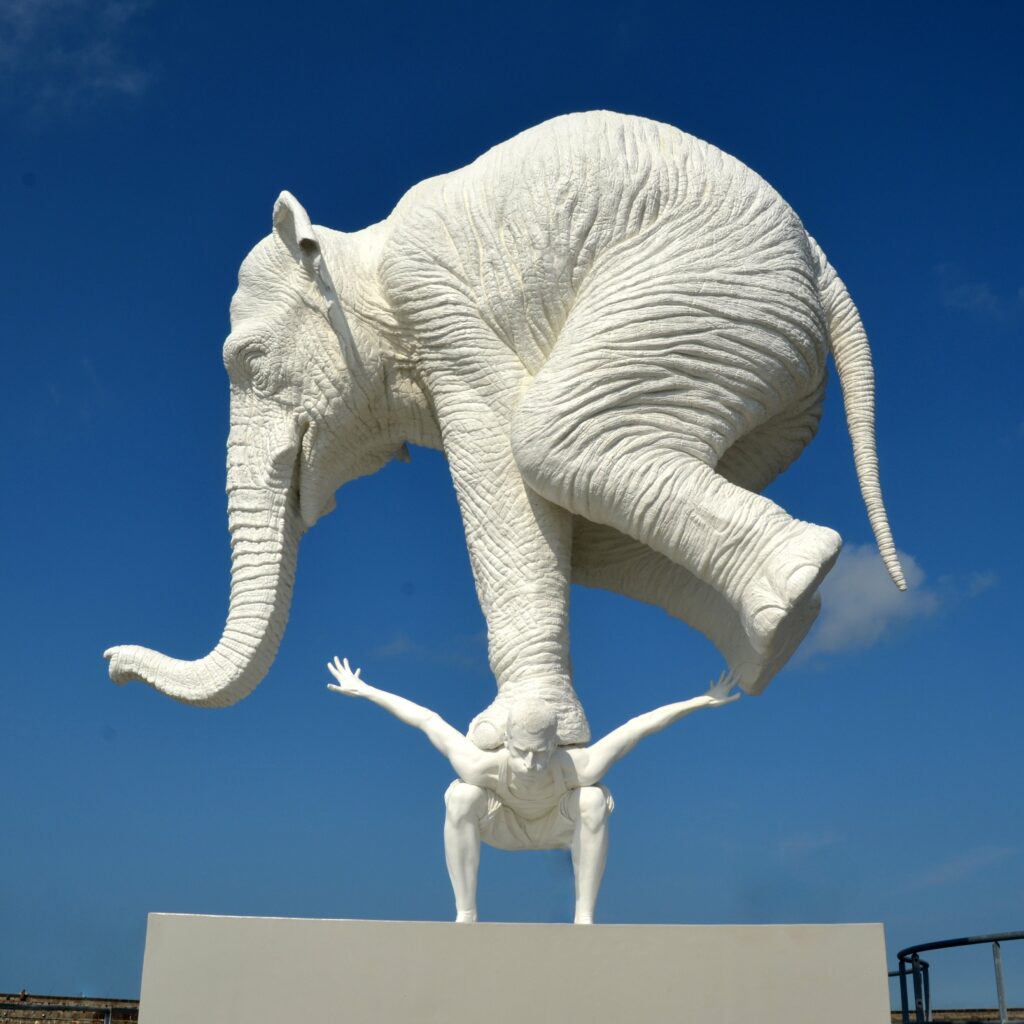
The Owner Tax is the price you pay for being indispensable.
It shows up when you’re the only one who can make certain decisions, handle key relationships, or solve critical problems. At first, it feels normal. After all, you built the business, so of course everything runs through you.
But over time, that responsibility starts to pile up.
You become the center of everything. The person the team depends on. The one who has to step in when something goes wrong. And slowly, without realizing it, the business becomes harder to step away from.
What the Research Shows
This isn’t just a feeling. It shows up clearly in the data.
Many businesses struggle to sell because they depend too heavily on the owner.¹ And even when they do find a buyer, they often sell for 20 to 40 percent less than companies that can run on their own.²
Researchers have studied this for years and reached a similar conclusion. When too much of the business depends on one person, the perceived value drops.³
Some experts call this “founder centrality,” where everything flows through the owner.⁴ While it may keep things running day to day, it also makes the business more fragile and harder to transfer.
The Real Cost
The financial impact can be significant.
Businesses that can operate without the owner often sell for 6 to 8 times their earnings.⁵ In contrast, businesses that rely heavily on the owner tend to sell for closer to 3 or 4 times.⁶
That difference adds up quickly.
If your business earns 500,000 a year, that could mean the difference between a 2 million dollar exit and a 4 million dollar one.
But the cost isn’t only financial.
Many owners reach a point where they feel stuck. Not because the market is bad or the business isn’t doing well, but because everything still depends on them.⁷

Why This Happens
In the early stages of a business, this setup makes sense.
You’re involved in everything. You make the decisions, build relationships, and solve problems as they come up.
The challenge is that, over time, that structure doesn’t evolve.
Important knowledge stays in your head.
Decisions still need your approval.
Customers continue to rely on you personally.
And without meaning to, you become the bottleneck.
Building a Better Structure
Businesses that grow beyond this stage tend to look very different.
They have systems that guide how work gets done. They have team members who can make decisions with confidence. And they rely on processes that produce consistent results, no matter who is involved.⁸
This kind of structure doesn’t just make the business easier to run. It also makes it far more attractive to a buyer.
What You Can Do
If this feels familiar, the good news is that it can be changed.
It usually starts with something simple: getting what’s in your head out onto paper. When processes are documented, they become easier to share and improve.
From there, it’s about gradually shifting responsibility. Giving your team the space to make decisions and building systems that support them.⁴
It doesn’t happen overnight, but every step in that direction reduces your dependence and increases the value of the business.
The Hard Truth
The Owner Tax doesn’t just affect your future sale.
It affects how you experience your business today.
It can limit your time, your flexibility, and your ability to step away when you need to.
But unlike most taxes, this is one you can reduce.
You can build a business that doesn’t rely on you for everything. And when you do, it becomes more valuable, more stable, and much easier to manage.⁹
The Question to Ask Yourself
If you stepped away for a month, with no calls or emails, what would happen?
Would the business continue to run smoothly?
Or would everything pause until you came back?
Your answer says a lot about whether you’re paying the Owner Tax.
My Invitation to You
If you’re not sure where you stand, that’s a great place to start.
I offer a free Owner Dependency Assessment where we look at your business together, identify where you’re most needed, and outline practical steps to reduce that dependence.
No pressure. Just a clear path forward.
¹ Exit Factor, Owner Dependence Research, https://exitfactor.com/
² Ibid.
³ University of Twente, Owner Dependence Study (Gurbanov), https://essay.utwente.nl/63820/
⁴ Emerge and Rise, Owner Independence Framework , https://emergeandrise.org/
⁵ Value Builder Analytics, aggregated business owner data, https://valuebuilder.com/
⁶ Ibid.
⁷ Wealth Enhancement Group, Business Owner Insights, https://www.wealthenhancement.com/
⁸ Publinova, Ownership Transfer Research, https://publinova.nl/
⁹ Journal of Small Business Management, research on succession planning and firm value https://onlinelibrary.wiley.com/journal/1540627x